Powdered Elegance and Velvet Root

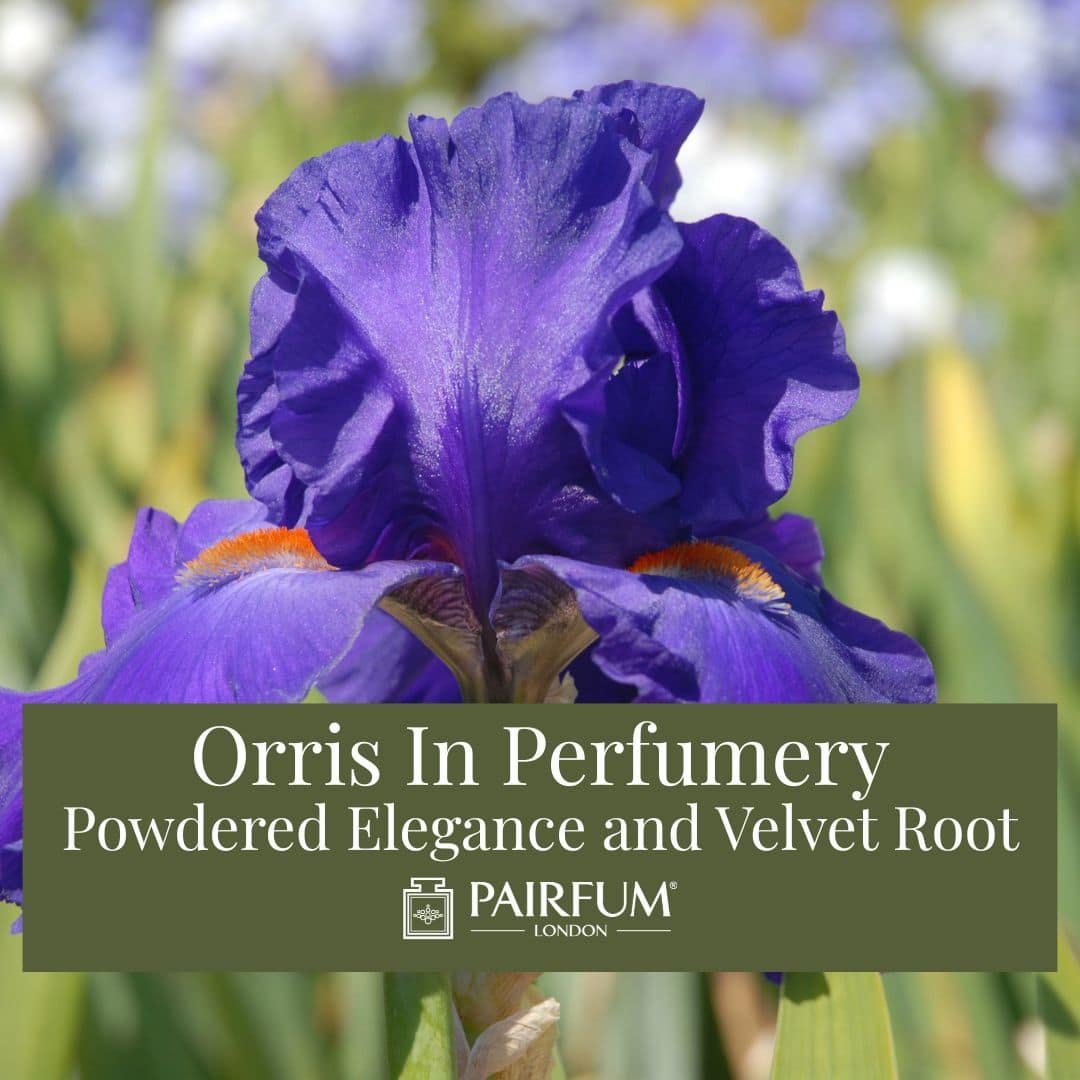
Orris refers essentially to the dried and ground rhizomes (the underground stems) of certain iris species, most notably Iris germanica and Iris pallida. It is highly valued in the perfume and spirits industries for its distinct powdery, violet, and earthy aroma, serving as a natural fixative to harmonise various scents. Historically, it has also been utilised in traditional medicine and cosmetic applications. After a multi-year drying process, the initial bitter, earthy odour matures into a sophisticated floral fragrance reminiscent of violets, rendering it a precious, though costly, botanical component.
There’s something quietly beautiful about orris. Powdery, soft, and smooth to the point of feeling creamy, it’s a note that lingers gently and leaves behind a feeling rather than a statement. A whisper of violet, pale suede, or warm fabric might come to mind when you try to describe it. Orris comes from the root of the iris flower, not the petals, and it takes years to become ready for perfume. That patience pays off. It’s a favourite during winter, when its velvet-like richness and lightly floral aura bring comfort and calm. Here, we look at the story behind orris, what gives it its distinctive character, and how it continues to hold a prized place in fragrance and perfumery today.
A Root with a Rich History
Orris isn’t new to perfumery, far from it. This soft, powdered note has been used in luxury oils and fragrance blends since ancient Egypt. Back then, dried iris root was burned with oils or added to balms, creams, and early lotions. By the time of the Renaissance, especially in places like Venice and Florence, finely ground orris root powder was packed into linen chests and wardrobes. It helped preserve textiles, repel insects, and scent garments with a gentle powder that aged gracefully.
- Centuries ago, orris root was used as a fixative, helping other perfume ingredients last longer.
- Its subtle nature made it a natural choice for adding softness and balance, especially when other ingredients were overly sharp or bold.
- Before modern perfume-making, orris appeared in medicine, soap, and beauty preparations, often blended into powders and spirits for both scent and flavour.
In historical records, orris is sometimes referred to as the Queen Elizabeth root, a name linked to its popularity in Tudor England. Even as synthetic aroma chemicals emerged, orris retained its place, especially in refined perfume, where nuance matters more than impact.
The Iris Family Behind Orris
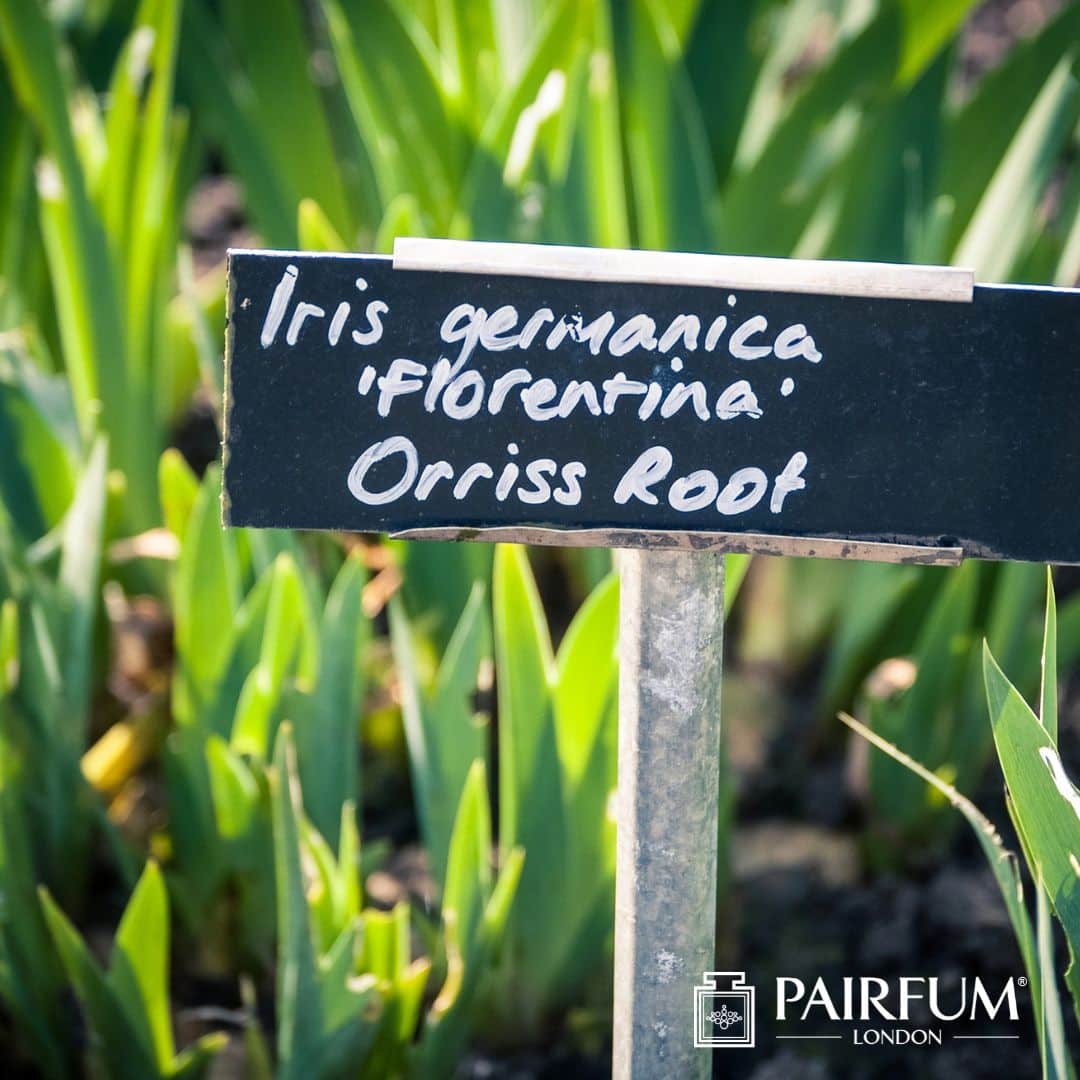
To understand orris, you need to understand iris. Several species are used, each lending subtle differences. The most prized varieties are Iris Pallida, Iris Germanica, and Iris Florentina. You may also see references to German iris or pallida in older perfumery texts.
- Iris pallida is known for a softer, more floral profile.
- Iris germanica brings slightly earthier, woody tones.
- Iris florentina has long been associated with Italian orris production.
These iris plants are grown for their rhizomes, often called iris root once harvested. The living plant has very little scent. The magic only begins after drying and ageing, when natural compounds develop into what we recognise as orris.
It’s easy to think orris would come from the flower of the iris. But it’s the root, or rhizome, that holds the aroma. And the process of getting orris oil, often called orris butter, takes a long time.
- Iris roots are harvested from mature plants of Iris Pallida or Iris Germanica.
- The roots are washed, peeled, and left to dry for at least three years. During this time, the scent slowly forms.
- After ageing, the dried orris root is ground. At this stage, it may be sold as orris root powder for potpourri or traditional uses.
- Steam distillation or solvent extraction produces orris concrete, which is then refined into orris butter or, less commonly, orris absolute.
True orris butter is pale, waxy, and solid at room temperature. It melts with warmth, releasing a creamy, buttery iris aroma that is prized in high-end perfume.
Why Ageing Orris Cannot Be Rushed
Fresh iris root is almost scentless. This is one of the most important and least intuitive facts about orris, and a key reason it is so rare. According to documented agricultural and chemical studies, the characteristic aroma develops only during long-term ageing, as naturally occurring compounds slowly transform into aromatic molecules known as irones.
These changes happen over years rather than months. Attempts to speed up the process result in a flatter, less complex scent. This is why traditional producers insist on extended drying and storage, even though it delays any financial return.
Orris as an Ingredient in Modern Perfumery
Orris is one of the most expensive natural ingredients in perfumery. Its cost reflects time, labour, and low yield. For this reason, it is used sparingly, often as a base note or structural element rather than a feature.
As an essential oil substitute, orris butter provides depth rather than diffusion. It anchors lighter notes and smooths transitions between top and base. Many perfumers value it for how it blends with soft musk, sandalwood, amber, and patchouli, adding a polished, powdery finish.
Because of its density, orris also helps stabilise volatile ingredients, making a perfume last longer on the skin.

What Does Orris Smell Like?
It’s hard to describe orris without comparing it to textures. It doesn’t jump out the way citrus or spice might. Instead, it feels like a fragrance worn close to the skin. Silky and smooth, slightly creamy, with a refined powder quality. Many say it reminds them of:
- Violet petals and soft floral powder
- Old-fashioned face powder or cosmetics
- A fine piece of paper, suede, or clean fabric
- A whisper of almond, wood, or a faint fruity undertone
Orris can also carry a buttery iris impression, sometimes described as cosmetic or lipstick-like. This powdery effect is why it appears so often in classic perfume styles.
Orris Root Powder and Traditional Uses
Beyond perfume, orris root powder has a long history. It has been used in potpourri, scented drawers, and even early dental powders. In some traditions, powdered orris root was added to soap, giving a gentle scent and helping the bar age well.
Its use in flavour was rare but documented, especially in spirits and liqueurs, where a trace amount added a floral nuance. These uses declined as safety standards tightened, since prolonged exposure can cause mild irritation in some people.
Where Orris Is Grown Today
Today, commercial orris production is limited to a small number of regions. Italy remains the most significant source, particularly Tuscany, where iris florentina has been cultivated for centuries. The region’s dry summers, well-drained soils, and long agricultural tradition support the slow development required for high-quality orris root.
Smaller quantities are grown in parts of France and North Africa, but global production has declined. Many farmers have moved away from orris cultivation due to the long wait before harvest and the uncertainty of long-term pricing.
Why Orris Is Considered One of the Rarest Perfume Ingredients
Orris is often described as one of the world’s rarest perfume ingredients, not because the iris plant itself is uncommon, but because so few producers can sustain the process. Fields must be maintained for years without income, followed by further years of storage after harvest.
This extended timeline requires land, labour, and specialist knowledge passed down through generations. As a result, orris butter can command exceptionally high prices, reflecting time and expertise rather than simple scarcity.
Iconic Pairings and Notes That Suit Orris
Orris works best when paired thoughtfully. In perfumery, it often supports rather than leads.
Common companions include:
- Soft musk for warmth and intimacy
- Woody notes such as sandalwood or vetiver
- Patchouli, used carefully to add depth without heaviness
- Amber for resinous warmth
- Jasmine in small amounts to lift the floral side
- Juniper or citrus in the opening to contrast its softness
Together, these notes create balance. Orris smooths sharp edges and gives structure to complex perfume compositions.
Famous Orris Fragrances
Guerlain – Après l’Ondée
A classic composition where orris lends a delicate, powdery softness, blending seamlessly with violet and aniseed to create a wistful, atmospheric scent that feels both romantic and introspective.
Chanel – No. 19
Known for its elegant restraint, this fragrance uses orris to soften crisp green notes and iris, giving structure and poise while maintaining a cool, refined character.
Dior – Homme (Original)
A modern icon built around a smooth, buttery iris and orris accord, balanced with subtle woods and musk to create a contemporary, intimate fragrance with distinctive depth.
Pairfum London – Pink Powder & Violet
A floral fusion of Pink Powdery Rose Petals with Green Violet Leaf and Elegant Iris. The fragrance opens with top notes of Mandarin, Baies Rose and Pink Peppercorn, and finishes on a sumptuous base of Smooth Patchouli, Musk and Vanilla. Orris, Jasmine and Heliotrope enhance the heart note.
Orris in Winter Perfume Palettes
There is something fitting about orris in the colder months. When the air outside is sharp, the powdery warmth of orris feels comforting. It evokes wool, old books, and polished wood rather than sweetness.
- In winter perfume, orris helps temper spice and resin.
- It pairs well with incense, soft balsams, and woody accords.
- It brings a calm presence that lasts throughout the day.
Because it sits close to the skin, orris perfume never feels overwhelming, even when layered with richer notes.

Natural Variations and Quality Differences
Not all orris is equal. Soil, climate, and ageing conditions all affect the final scent. Italian-grown orris, particularly from iris florentina, is often considered the benchmark. Differences between pallida and german iris also matter, with some lots leaning more floral and others more earthy.
Quality is judged by smoothness, lack of harshness, and the balance between powder and wood. Lower quality material may smell dry or dusty, lacking the creamy character associated with fine orris butter.
Orris and the Role of the Perfumer
Using orris well requires restraint. A skilled perfumer understands how little is needed. Too much can mute a fragrance or make it feel cosmetic. Used properly, it gives cohesion and elegance.
In a finished perfume, you may not immediately identify orris, but you would notice its absence. It is often the quiet reason a blend feels finished rather than fragmented.
A Note on Safety and Skin Use
As with many natural ingredients, orris must be handled carefully. In its raw form, orris root powder can cause irritation if inhaled or applied directly. In finished perfume, however, it is used at safe, regulated levels and is suitable for skin contact.
Why Orris Still Matters
Orris continues to hold attention because it never tries to be fashionable. In a market filled with bold launches and attention-grabbing notes, it offers something calmer and more assured. Powdery yet warm, woody yet floral, it brings together contrasts in a way that feels natural rather than engineered.
For those new to fragrance, orris can come as a quiet surprise. It encourages slower appreciation and a closer awareness of scent. For experienced perfume lovers, it remains a clear signal of quality and careful craft. As perfumery keeps evolving, this soft, velvety root still plays an essential role, connecting contemporary creations to centuries of tradition.

Exploring Orris Beyond Perfume
While orris is best known for its role in fine fragrance, it has quietly made its way into other scented products. You will now find it in well-made candles, traditional soaps, and smaller niche items where subtle scent work is valued. Orris has a way of smoothing out a composition, taking away sharp edges and giving the whole fragrance a more considered feel. This makes it especially useful outside perfume, where balance matters more than impact.
Whether someone comes across orris as a concrete, an absolute, or the much-talked-about orris butter, the experience is rarely immediate. It is an ingredient that asks to be lived with rather than judged quickly. In perfumery, there are very few materials that manage to feel both rich and restrained at the same time, which is part of the reason orris remains so highly regarded.
Orris Base Notes in Pairfum London Home Fragrance
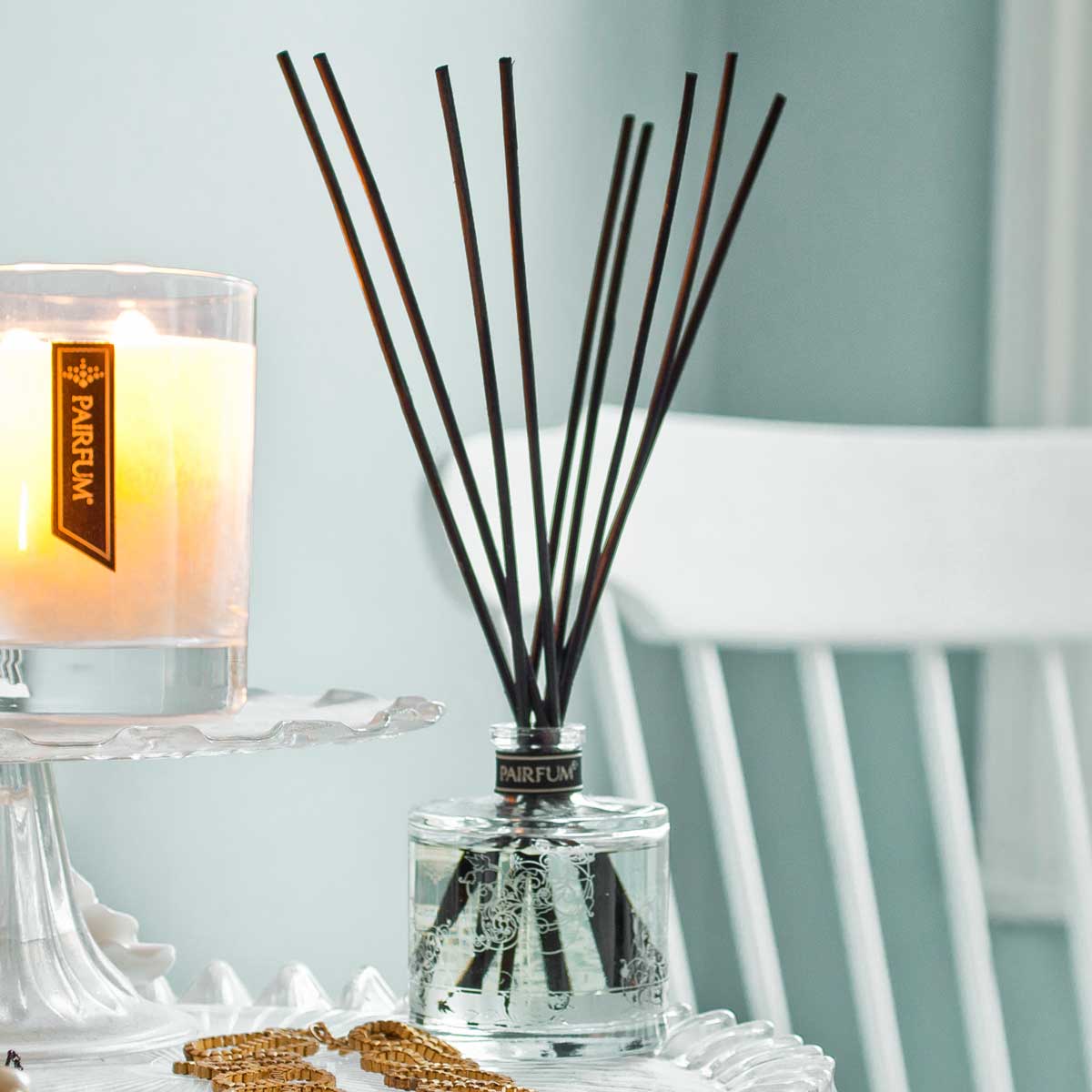
Using orris in the home brings a sense of calm that feels natural rather than styled. This classic reed diffuser tower is designed to release fragrance slowly, which suits a note like orris particularly well. Instead of filling a room all at once, the scent builds gently in the background. Over time, the powdery softness becomes more noticeable, adding warmth without ever feeling heavy.
Placed in a living room, bedroom, or hallway, the diffuser creates an atmosphere that feels settled and comfortable. It brings to mind freshly laundered fabrics, smooth wood surfaces, and a quiet kind of luxury. These are the same qualities that have made orris such a valued ingredient in perfumery for generations.
Pink Powder & Violet – Classic Tower Reed Diffuser by Pairfum London
This fragrance combines pink, powdery rose petals with elegant iris and fresh green violet leaf. The opening notes include mandarin, baies rose, and pink peppercorn, offering a gentle lift at first. As the scent develops, it settles into a soft base of patchouli, musk, and vanilla. Jasmine, orris, and heliotrope sit at the heart, helping to tie the composition together and keep it balanced.
Conclusion
Orris reminds us that some perfume ingredients cannot be rushed. From the long ageing process of the iris root to the delicate, powdery effect it brings to a finished scent, everything about orris reflects time and careful handling. It is never showy and never fleeting, yet it leaves a lasting impression. For anyone interested in how fragrance can feel deep without being overpowering, Orris continues to offer one of the clearest examples.